The Use of Drumming as Cure for Children with Post-Traumatic Stress Disorder (PTSD)
Copyright © 2003 by David Otieno Akombo, Ph.D
Post-Traumatic Stress Disorder (PTSD) can be an extremely
debilitating condition that can occur after exposure to a
terrifying event in which grave physical harm occurred or was
merely threatened. Traumatic events that can trigger PTSD include
violent armed conflict like that of Somalia, Rwanda and Burundi,
and Sudan. Others may include personal assaults such as rape or
mugging, natural or human-caused disasters, accidents, or military
combat such as the veterans who are serving in Iraq or those who
served in Vietnam and the Gulf Wars; rescue workers involved in the
aftermath of disasters of the World Trade Center, survivors of
accidents, rape, physical and sexual abuse, and other crimes;
immigrants fleeing violence in their countries; survivors of the
1998 Nairobi US Embassy Bombing among others.
Effective treatments have now been developed to help people
with PTSD. Research is also helping more scientists to better
understand the condition and how it affects both the brain and
body. Different forms of music such as drumming are becoming an
important therapeutic tool. Drumming exercises greatly reduce
stress among Vietnam veterans and other victims of trauma,
apparently by altering their brain-wave patterns.
The effect of drum in the treatment of diseases should not be
disputed. Since our ancestors first struck sticks and rocks against
the ground, drumming has been a sacred ritual in many societies.(1)
This belief emanates from the fact that throughout the world, the
drum has been used for healing purposes. The traditional peoples of
Africa, the Aboriginals of Australia, the Balinese of Southeast
Asia, the Native American Indians, the ancient Celts among others
all used drumming to bring the rain, the sun, a bountiful harvest,
successful hunting and good health.(2) The drum has also been used
in tribal societies with shamanistic traditions while communicating
with the gods. In West-African wisdom teachings, Cottel (2001)
noted that emotional disturbance manifests as an irregular rhythm
that blocks the vital physical energy flow. Cottel also refers to
current medical research which has shown that stress is a cause of
ninety eight percent of all diseases such as heart attacks,
strokes, immune system breakdowns, among others. Recent biofeedback
studies (for example, Spintge 1992; Harner 1990; McIntosh 1996)
show that drumming along with our own heartbeats alters brainwave
patterns (increasing alpha) and dramatically reduces stress. Unlike
the western cultures which rely on material evidence such as
infection from bacteria or viruses, cell production such as cancer,
or genetic defective chromosomes, the non-western cultures, relate
to the diseases from a cultural perspective connecting the etiology
to the metaphysical world. Their understanding of the disease
etiology is embedded in their cosmology. For example the Luo
tribesmen of Kenya believe that HIV/AIDS is caused by a curse. In
this perspective, a curse is viewed as evil pronounced or invoked
by another living person or the spirit of the dead. Among the Luo
tribe, drum ensembles are performed with the object of exorcising
the bad spirit from the patients.
Among the many African tribes, regular and balanced meter are
regarded as a sign of good health. Even in improvisations, the
performers are expected to render an exact replica of a
standardized musical practice. These mythologies that relay regular
and replicated rhythms to heal the person in an immediate and
powerful way by removing blockages and releasing tension can be
seen in the performance of a Kenyan tribal ritual dance, ngoma of
the Taita as well. During this performance, a glissando is played
by the lead drummer by gliding his left hand from the middle of the
drum to the edge (kusira ngoma). By doing this, the drummer not
only provides an expressively emotional pattern at the climax of
the healing ritual but also provides a functional significance to
the healing process because it is during this moment that the
drummer sedates the pepo spirit to descend and exorcise the evil
spirits from the patients. Kusira ngoma, which literally translates
into "going beyond with music," is the climax of the healing ritual
and its ultimate extreme. This is the stage at which the patients
shiver, fall to the ground and ultimately go into trance. During
this healing ceremony, the master drummer controls the emotions of
the patient while the patient unlocks his or her inner subconscious
mind. In the middle of the performance when the interlocking parts
become intense, the patient is induced to a state where they start
to dance pathogenically as they respond to the mwazindika drum,
letting their souls soar into the supernatural world to meet the
deity. In a similar supernatural mediation, Cornelius (1990: 127)
found that the Afro-Cuban bata drums were believed to be capable of
talking and communicating directly with the Orishas, Yoruba gods.
But this power of the drum to be able to speak is also possibly
seen as a catalyst to helping people to talk. Ms. Ruth Noonan, a
practicing music therapist in Longmont United Hospital in Colorado
has observed that in her recent practice, she has witnessed the
drumming helping a patient to regain speech:
There have been magical moments as well. One man who did not
speak due to a stroke is now able to tell me that he grew up on a
farm and always loved music. Now he is participating for the first
time in music instead of just listening and he loves it... and he
is talking!!!
As the patients delve into subconscious worlds, the healer
plays glissando (kusira ngoma) on the mwazindika. The healer, who
occasionally wets his left thumb with saliva and glides it from the
edge to the middle of the drum, continues to pound from the edge to
the middle with his right hand until the patient stands and gets
out of the healing arena.
Post-traumatic stress disorder is defined as a severe reaction
to a traumatic event involving actual or threatened death or
serious injury to self or others. According to the mental institute
of health, PTSD can have an acute onset soon after the trauma, or a
delayed onset in which the symptoms occur more than six months
after the trauma.(3) It has been observed that an acute PTSD may
resolve after three months, followed by a chronic form of the
disorder which may persist even past that time. It should be noted
that PTSD can occur at any age and can follow a natural disaster
such as flood or fire, a man-made disaster such as armed conflict
such as those experienced in Somali, Rwanda, Burundi, and Sudan.
Others may include imprisonment, assault, domestic abuse or
rape.
The causes of PTSD are not quite known. Many scholars (Konchin
2001; Shay 1995; ) have discussed and theorized extensively on the
its causes, the National Institute of Mental Health points to
psychological, genetic, physical, and social factors as its
possible abode. The Mental Health Channel has
observed:
The amygdala, a structure in the brain, is part of the limbic
system that is involved in the expression of emotion, especially
fear, autonomic reactions (e.g., increased heart rate and blood
pressure, the startle response), and emotional memory. Dysfunction
in this structure may produce symptoms of
PTSD.(4)
PTSD alters the way our body responds to stress, effecting
mediators such as stress hormones and neurotransmitters.(5) Prior
exposure to trauma may increase risk, suggesting a kind of learned
response. Music therapy plays a protective role. In studies of
Vietnam veterans, drumming exercises greatly reduce stress among
them and other victims of trauma by altering their brain-wave
patterns.(6)
Prognosis of patients with Post-Traumatic Stress Disorder
The aim of treatment is to reduce the symptoms by encouraging
the affected person to recall the event, to express feelings, and
to gain some sense of mastery over the experience.(7) The drum has
been used in many communities especially in Africa to help the
victim recall the traumatic event and dance away the spirit. As a
catastrophe, famine is one seasonal event that brings trauma to
families all over the world. Among the Luo tribe of Kenya, each
famine is allocated a name. This name is also synonymous with the
bad spirit that is responsible for the famine. One such famine is
nyawawa which emerges as a wind and sweeps across the Luo country.
This wind is a spirit and may cause death and destruction including
bringing famine. Whenever families think of famine, they remember
their loved ones who may have died due to lack of adequate food as
a result of this spirit. In many parts of the Luo tribe, the bad
forces of nature that stop the rains and bring starvation are also
responsible for causing other sicknesses as well. The National
Institute of Mental Health identifies three stages of PTSD. The
first state is where the patient experiences recurrent distressing
memories of the event or experiences recurrent dreams of the event,
or flashback episodes when the event seems to be re-occurring. The
Luo community will play drums in such seasons to exorcise the
spirits from the affected children and adults alike. This approach
is consistent with the National Institute of Mental Health's
Behavioral therapy which is used to treat avoidance symptoms.
Behavior techniques used include the graded exposure to rhythms and
melodies a like. Just like the medications act upon the central
nervous system to reduce feelings of anxiety and associated
ailments, so the drums elicit that effect. Antidepressant
medications have been proven effective in treating PTSD, including
newer compound agents such as Prozac, Paxil and Zoloft. Sedating
agents can help with sleep disturbance. Anti-anxiety agents may be
useful, but the benzodiazepines, a common class of these
medications, can potentially become as addictive the drum music of
the Luo. The second state is the avoidance where the patient
exhibits significantly inability to recall important aspects of the
trauma, or lack of interest in activities. The patient also shows
feelings of detachment, sense of foreshortened future, psychic or
emotional "numbing" and restricted range of affect.(8) The last
state is the arousal state where the patient is highly irritable or
shows outbursts of anger. The victim also exhibits sleeping
difficulties and has difficulty concentrating leading to Attention
Deficit Disorder (ADD) especially in children.
Prevention of PTSD
Early counseling and crisis intervention through music are
important for people who have experienced extremely stressful
situations. Musical interventions may help prevent chronic forms of
PTSD and should be part of public health responses to groups at
risk such as disaster victims.
Experience at the Shands Hospital at University of Florida
As part of my study of the use of music in health with Dr.
Miriam Zach of the University of Florida School of Music, I have in
the fall semester of 2003 devoted two hours weekly to the Intensive
Pediatric Care Unit (IPCU) of Shands Hospital of the University of
Florida. Drumming is becoming an important therapeutic tool. In
this pediatric unit, I have been able to play miniature "drum
circles" and other forms of drum therapy to help the patients
reduce pain. In one instance, my drumming was instrumental in
helping the nurse give routine injections to the children. Although
my drumming temporarily reduced stress and fear associated with the
jab and the piercing of the epidermis, this therapeutic
intervention greatly helped the children. The effect was achieved
by altering the children's brain-wave patterns.
On several occasions, while at the IPCU, I have a dozen
children residents with disorders of the nervous system, disorders
of the brain, meninges, and skull gathered for their weekly rhythm
circle. With the help of therapist Kathy Dewitt, Rusti Brandman and
John Graham-Poe, I had each child shake maracas to the tunes of
Sani Bona, a South African tune. Some who seemed otherwise confused
could nonetheless tap perfectly on cue. Patients unable to speak
were able to sing childhood songs. Those barely able to walk could
lift their limbs when the dancers moved to my drum beats. As yet,
neuroscience has no sure explanation, but some experts think the
brain's receptors for music and rhythm are spared the early ravages
of senility. And while many scholars may argue that no amount of
drumming can cure the disease with significant results, drumming
can improve the quality of life and offer another way for pain
relief and attainment of the highest
satisfaction.
Footnotes
1 Dorian Friedman, US News and World report, June 9,
1997
2 Moonsong Music Company at http://www.holistic.ie/main/essays/music.htm
3 Institute of Mental Health Publication
4 Mental Health Channel
5 Ibid
6 Dorian Friedman (1997). Drumming To The Rhythms Of Life. US News and World report, June 9, 1997
7 Institute of Mental Health Publication
8 Ibid
2 Moonsong Music Company at http://www.holistic.ie/main/essays/music.htm
3 Institute of Mental Health Publication
4 Mental Health Channel
5 Ibid
6 Dorian Friedman (1997). Drumming To The Rhythms Of Life. US News and World report, June 9, 1997
7 Institute of Mental Health Publication
8 Ibid
References
anon (1994) Diagnostic and Statistical Manual of Mental
Disorders. Vol. IV. American Psychiatric Association.
1994
anon (1998) Post-Traumatic Stress Disorder (PTSD).
Akombo, D. (2001) "Reporting on Music Therapy in Kenya". In Voices: A World Forum for Music Therapy, 1 (1), Oslo: Sogn og Fjordane University Press
Cornelius, S. (1990) "Encapsulating Power: Meaning and Taxonomy of Musical Instruments of Santeria in New York City". In Selected Reports in Ethnomusicology (8) 125-142
Cornelius, S. (2000) "They Just Need Money: Goods and Gods, Power and Truth in a west African Village". In The African Diaspora, Ingrid Monson (ed). New York: Garland Publishing Inc
Cottrell, A. (2001) Healing Musical Instruments.
Erdtsieck, J. (1997) Pepo As An Inner Healing Force: Practices of a Female Spiritual Healer in Tanzania. Amsterdam: Royal Tropical Institute
Fedders, A. & C. Salvadori (1979) Peoples and Cultures of Kenya. Nairobi: Transafrica
Finke, J. (2001) Traditional Music and Cultures of Kenya.
Finke, J. (2002) Music in Taita. Personal Communication, January 6th, 2002
Friedson, S. (1998) "Tumbuka Healing". In The Garland Encyclopedia of World Music Vol. 1, R.M. Stone (ed). New York: Garland Publishers
Good, Charles M. (1987) Ethnomedical systems in Africa: patterns of traditional medicine in rural and urban Kenya. New York: Guilford Press
Harper, P. (1969) "Dance In Nigeria". In Ethnomusicology, 9 (1), 280-295
Hobart, A., U. Ramseyer & A. Leeman (1996) The Peoples of Bali. Oxford: Blackwell Publishers Limited
Hollandsworth, J. (1990) The Physiology of Psychological Disorders: Schizophrenia, Depression, Anxiety, and Substance Abuse. New York: Plenum Press
Hood, M. (1982) The Ethnomusicologist. Kent: Kent State University Press
Horden, P. (2000) Music as Medicine: The History of Music Therapy since Antiquity. Hants: Ashgate Publishing House
Huebner, P. (2001) Nature's Laws of Harmony in the Microcosm of Music. From a lecture given by the classical composer Peter Huebner at the medical faculty of the University of Heidelberg, the University of Tel Aviv and the University of Magdeburg.
Janzen, John M. (1992) Ngoma: Discourses of Healing in Central and Southern Africa. Berkeley: University of California Press
Janzen, John M. (1978) "The Comparative Study of Medical System as Changing Social Systems". In Social Science and Medicine (12) 2B: 121-129
Konchin, D. (2001) Post Traumatic Stress Disorder: the invisible injury. Oxford: Success Unlimited Publishers
Kovach, A. M. (1985) "Shamanism and Guided Imagery and Music: A Comparison". In Journal of Music Therapy, XXII (3). National Association of Music Therapy, Inc.
Lazarof and Shimshoni (2000) "Reducing Blood Pressure in Patients with Neurodermatitis and Psoriasis".
Moreno, J. (1995) "Ethnomusic Therapy: An Interdisciplinary Approach to Music and Healing." In The Arts in Psychotherapy 22(4), 329-338
Mullings, L. (1984) Therapy, Ideology, and Social Change: Mental Healing in Urban Ghana. Berkeley: University of California Press
Nketia, K. (1962) "The problem of Meaning in African Music". In Ethnomusicology. Ann Arbor, Society for Ethnomusicology
Nketia, K. (1962) African Music in Ghana: A survey of Traditional Forms. Accra: William Clowes & Sons Limited
Nketia, K. (1979) The Music of Africa. London: Victor Gollancz Ltd.
Robert, S. & M. Louise (1961) Songs of power. Syracuse: Church of the Christian and Missionary Alliance
Senoga-Zake, G. (1986) Folk Music of Kenya. Nairobi: Uzima Press
Shay, J. (1995) Achilles in Vietnam: Combat Trauma and the Undoing of Character. New York: Touchstone/Simon & Schuster
anon (1998) Post-Traumatic Stress Disorder (PTSD).
Akombo, D. (2001) "Reporting on Music Therapy in Kenya". In Voices: A World Forum for Music Therapy, 1 (1), Oslo: Sogn og Fjordane University Press
Cornelius, S. (1990) "Encapsulating Power: Meaning and Taxonomy of Musical Instruments of Santeria in New York City". In Selected Reports in Ethnomusicology (8) 125-142
Cornelius, S. (2000) "They Just Need Money: Goods and Gods, Power and Truth in a west African Village". In The African Diaspora, Ingrid Monson (ed). New York: Garland Publishing Inc
Cottrell, A. (2001) Healing Musical Instruments.
Erdtsieck, J. (1997) Pepo As An Inner Healing Force: Practices of a Female Spiritual Healer in Tanzania. Amsterdam: Royal Tropical Institute
Fedders, A. & C. Salvadori (1979) Peoples and Cultures of Kenya. Nairobi: Transafrica
Finke, J. (2001) Traditional Music and Cultures of Kenya.
Finke, J. (2002) Music in Taita. Personal Communication, January 6th, 2002
Friedson, S. (1998) "Tumbuka Healing". In The Garland Encyclopedia of World Music Vol. 1, R.M. Stone (ed). New York: Garland Publishers
Good, Charles M. (1987) Ethnomedical systems in Africa: patterns of traditional medicine in rural and urban Kenya. New York: Guilford Press
Harper, P. (1969) "Dance In Nigeria". In Ethnomusicology, 9 (1), 280-295
Hobart, A., U. Ramseyer & A. Leeman (1996) The Peoples of Bali. Oxford: Blackwell Publishers Limited
Hollandsworth, J. (1990) The Physiology of Psychological Disorders: Schizophrenia, Depression, Anxiety, and Substance Abuse. New York: Plenum Press
Hood, M. (1982) The Ethnomusicologist. Kent: Kent State University Press
Horden, P. (2000) Music as Medicine: The History of Music Therapy since Antiquity. Hants: Ashgate Publishing House
Huebner, P. (2001) Nature's Laws of Harmony in the Microcosm of Music. From a lecture given by the classical composer Peter Huebner at the medical faculty of the University of Heidelberg, the University of Tel Aviv and the University of Magdeburg.
Janzen, John M. (1992) Ngoma: Discourses of Healing in Central and Southern Africa. Berkeley: University of California Press
Janzen, John M. (1978) "The Comparative Study of Medical System as Changing Social Systems". In Social Science and Medicine (12) 2B: 121-129
Konchin, D. (2001) Post Traumatic Stress Disorder: the invisible injury. Oxford: Success Unlimited Publishers
Kovach, A. M. (1985) "Shamanism and Guided Imagery and Music: A Comparison". In Journal of Music Therapy, XXII (3). National Association of Music Therapy, Inc.
Lazarof and Shimshoni (2000) "Reducing Blood Pressure in Patients with Neurodermatitis and Psoriasis".
Moreno, J. (1995) "Ethnomusic Therapy: An Interdisciplinary Approach to Music and Healing." In The Arts in Psychotherapy 22(4), 329-338
Mullings, L. (1984) Therapy, Ideology, and Social Change: Mental Healing in Urban Ghana. Berkeley: University of California Press
Nketia, K. (1962) "The problem of Meaning in African Music". In Ethnomusicology. Ann Arbor, Society for Ethnomusicology
Nketia, K. (1962) African Music in Ghana: A survey of Traditional Forms. Accra: William Clowes & Sons Limited
Nketia, K. (1979) The Music of Africa. London: Victor Gollancz Ltd.
Robert, S. & M. Louise (1961) Songs of power. Syracuse: Church of the Christian and Missionary Alliance
Senoga-Zake, G. (1986) Folk Music of Kenya. Nairobi: Uzima Press
Shay, J. (1995) Achilles in Vietnam: Combat Trauma and the Undoing of Character. New York: Touchstone/Simon & Schuster
Discography
Akombo, D. (2002). Folk Music of Kenya. Bowling Green: Music
Therapy International Inc. Ohio.
This CD is a composite of traditional folk tunes of Kenya performed during cultural activities including healing ritual ceremonies
This CD is a composite of traditional folk tunes of Kenya performed during cultural activities including healing ritual ceremonies
Online resources
Music Therapy International
http://mtikenya.tripod.com
American Psychiatric Association http://www.psych.org
National Institute of Mental Health (USA) http://www.nimh.nih.gov
National Mental Health Association (USA) http://www.nmha.org
American Psychiatric Association http://www.psych.org
National Institute of Mental Health (USA) http://www.nimh.nih.gov
National Mental Health Association (USA) http://www.nmha.org
Author biography
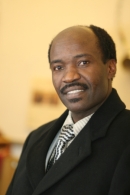
David Otieno Akombo, Ph.D, Assistant professor of Music, Weber
State University, is the author of Music and Healing Across
Cultures. Intrigued by the peculiarities of medical and
psychological practices and the arts in healing, Dr. Akombo has
studied and researched the healing power of the arts as both
scholar and performer. He is the founder of Music Therapy
International (MTI), a dynamic not-for-profit organization designed
to provide music healing services to the underprivileged both in
the USA and in Africa. Music educator, ethnomusicologist, musician,
composer and drummer, he has worked predominantly in Africa and
Southeast Asia and has studied with Balinese artists. Contact info:
Akombo D.O., Weber State University, 1905 University Circle, Ogden,
UT 84408-1905, USA. Tel: + 1 (801)626-6741. Fax: +1 (801)626-6811.
Email: dakombo@hotmail.com
LINK:
https://shamanicdrumming.com/drumming_for_ptsd.html
LINK:
https://shamanicdrumming.com/drumming_for_ptsd.html
Comments
Post a Comment